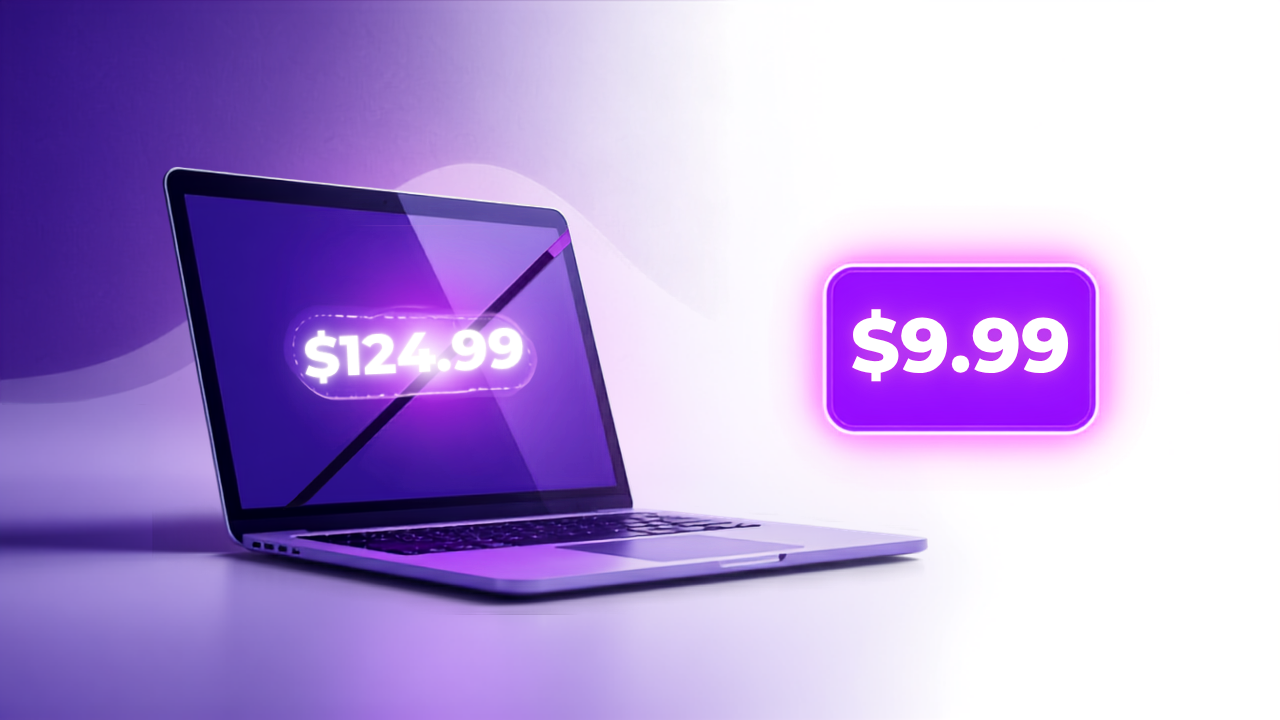
You’re looking at a course page. The price reads $124.99, struck through in red, next to a new number: $9.99. A countdown timer ticks down in the corner, warning you the deal ends in six hours. You’ve seen this exact layout on a hundred other course pages, on a hundred other days, and somewhere in the back of your mind you already suspect the “sale” isn’t going anywhere. You buy it anyway, because $9.99 for a course that might actually teach you something useful is hard to argue with, timer or no timer.
That tension between marketing theater and genuine value is basically the entire Udemy experience in one scene. This review looks past the countdown clocks to what you’re actually getting in 2026: real pricing, real course quality variance, and what happens when something goes wrong.
What Is Udemy, Exactly?
Udemy is an open marketplace for online courses. Unlike platforms that partner exclusively with universities, almost anyone can become a Udemy instructor and publish a course, which means the catalog is enormous — well over 250,000 courses spanning programming, business, design, marketing, and just about anything else you can teach through video. You buy a course once and keep it, watching on your own schedule, on desktop or through the mobile app, with lifetime access to whatever you purchased.
That open-marketplace model is both Udemy’s biggest strength and its biggest liability, and almost everything else in this review traces back to that one fact.
Udemy Pricing in 2026: Individual Courses, Personal Plan, and Business
Udemy sells access three different ways, and which one makes sense for you depends entirely on how you like to learn.
Individual courses are one-time purchases with lifetime access, officially priced anywhere from $19.99 to $199.99 across a set of fixed price tiers. In practice, almost nobody pays those numbers. Udemy runs near-continuous sitewide sales that push most courses down to a $9.99 floor, and if you buy during one of these — which is most of the time — you’re typically paying somewhere around $9.90 to $15 per course.
The Personal Plan, Udemy’s consumer subscription, gives you access to a curated library of more than 26,000 courses for roughly $14 to $20 a month, or a discounted annual rate that’s often closer to $168 a year rather than the $240 list price. It makes sense if you’re a frequent learner who wants to browse and switch between courses rather than commit to owning individual ones.
The Sale Price Is the Real Price — Here’s Why
Here’s the part worth internalizing before you buy anything on Udemy: never pay the listed price. The sale isn’t a rare event — it’s closer to the platform’s default state, with promotions running back-to-back throughout the year. Bookmark a course you’re interested in, wait a day or two if the current price feels high, and you’ll almost certainly see it drop. Treating the sticker price as a real number is the single most avoidable mistake a new Udemy shopper makes.
Udemy Business and Enterprise: A Different Pricing World
If you’re buying for a team rather than yourself, the math changes entirely. Udemy Business plans are priced per user, per year, generally landing somewhere in the range of $20 to $30 per user per month depending on commitment length and team size, with a Team plan aimed at smaller organizations and an Enterprise tier — offering access to 30,000-plus courses plus admin and reporting tools — priced custom based on your organization’s size. If you’re evaluating this for a company, get an actual quote rather than estimating from the consumer pricing, since the two products aren’t really comparable.
Course Quality: The Open Marketplace Problem
This is where Udemy’s core trade-off shows up most clearly. Because almost anyone can publish a course with minimal vetting, quality swings wildly — not just between subjects, but between two courses on the exact same topic. One instructor’s Python course might be meticulously structured with real projects and thoughtful pacing, while another covering identical material feels like a rushed screen recording with a script read in a monotone.
There’s no gatekeeping mechanism stopping a mediocre course from going live, which means the burden of quality control lands almost entirely on you, the buyer, before you click purchase.
How to Actually Filter for a Good Course
The rating system is genuinely your best tool here, and it’s worth using properly rather than glancing at the star average. Look at the number of ratings, not just the score — a 4.8 from 40,000 students means something completely different from a 4.8 from 12. Read a handful of the recent written reviews specifically, since they tend to flag pacing problems, outdated content, or instructor responsiveness issues that the star average alone won’t surface. And check the “last updated” date on the course itself; a programming course that hasn’t been touched in four years is a real risk in a field that moves as fast as software does.
The Refund Policy: What’s Promised vs. What Happens
On paper, Udemy’s policy is straightforward: a 30-day window to request a refund on any course, no questions asked, letting you try before you’re fully committed. In practice, the experience isn’t always that clean. Reviews and complaint boards include a real number of reports describing refund requests that were denied or delayed despite falling within the stated window, which creates a gap between the written policy and what some buyers actually experience.
That doesn’t mean refunds don’t work — most go through without incident, and at a $9.99 price point, most buyers never bother asking anyway. But if you’re spending closer to full price on a Business plan or a higher-tier course, it’s worth knowing the policy has documented exceptions rather than assuming it’s automatic.
Customer Support Depends on Who You Are
Udemy’s support experience isn’t uniform, and that’s worth knowing going in. Consumer-side complaints, particularly visible in communities like Reddit’s r/Udemy, describe slow or unhelpful responses to account and billing issues. Business and Enterprise customers report a noticeably different experience — G2 reviewers on the enterprise side often describe support as responsive and genuinely helpful. It’s effectively a two-tier system: pay more, get faster help, which isn’t unusual for software companies but is worth setting expectations around if you’re a $9.99 individual buyer expecting white-glove service.
What a Udemy Certificate Is (and Isn’t) Worth
Udemy issues a certificate of completion for finished courses, and it’s important to be clear-eyed about what that actually represents. It’s not an accredited credential, and it won’t carry the institutional weight of a university-backed certificate from a platform like Coursera. What it is, realistically, is a personal record that you finished something and a small resume line that shows initiative — useful in a portfolio or as a talking point in an interview, not something that substitutes for a degree or a recognized industry certification.
If your primary goal is a credential employers will specifically recognize, Udemy isn’t built for that use case. If your goal is learning a practical skill efficiently and cheaply, the certificate is a nice-to-have, not the point.
Lifetime Access: The Fine Print Worth Knowing
“Lifetime access” is one of Udemy’s most repeated selling points, and it’s mostly true, with a couple of caveats worth knowing before you treat it as an absolute guarantee. You keep access to a purchased course through your account indefinitely, across the desktop site and the mobile app, with offline downloads available for on-the-go viewing. That part holds up well in practice.
The caveat is that instructors can update, restructure, or in rare cases pull a course entirely, and while Udemy’s policies generally protect buyers in these situations, “lifetime” is really “lifetime access to a course that continues to exist on the platform,” not an ironclad guarantee independent of what the instructor and Udemy decide to do with it down the line. For the vast majority of purchases this distinction never matters. It’s just worth knowing it exists.
Udemy vs. Coursera and Skillshare
Against Coursera, Udemy wins clearly on price and course ownership — you own what you buy outright, forever, instead of renting access through a subscription that can lapse. Coursera wins on institutional credibility and accredited degree pathways, which Udemy doesn’t offer at all.
Against Skillshare, which runs entirely on a subscription model with a heavier lean toward creative and hobbyist content, Udemy’s individual-purchase model and much broader catalog — especially in technical and business subjects — make it the stronger choice if you know specifically what you want to learn rather than wanting to browse.
Who Should Actually Use Udemy?
Self-directed learners chasing a specific, practical skill — a programming language, a design tool, a marketing technique — get the most value here, especially if they’re comfortable using the rating system to separate the genuinely good courses from the mediocre ones. Bargain hunters who never pay full price and treat the sale cycle as the normal price will find Udemy to be one of the cheapest ways to learn almost anything online.
If you need a recognized credential for a career change, or you’d rather have a platform curate quality for you instead of doing the filtering yourself, Coursera or a similar accredited platform is probably the better starting point. And if you’re buying for a team, get a real Business quote before assuming the consumer pricing applies.
Hobbyists exploring something casually — photography, a musical instrument, a new language — also do well here, precisely because the low buy-in cost makes it easy to try a subject without much commitment. If the first course you pick turns out to be a poor fit, you’re out $9.99 and a few minutes, not a wasted subscription month.
Frequently Asked Questions
Is Udemy worth it in 2026?
For learners chasing a specific, practical skill and willing to use ratings and reviews to pick good courses, yes — especially at typical sale prices of $9.99 to $15 per course. It’s less compelling if you need an accredited credential or prefer a platform that curates quality for you.
How much do Udemy courses actually cost?
Listed prices range from $19.99 to $199.99, but near-constant sitewide sales bring most courses down to around $9.99 to $15. Treat the sale price as the real price — full price is rarely what anyone actually pays.
Is Udemy’s refund policy reliable?
Officially, yes — a 30-day, no-questions-asked window applies to most courses. In practice, some users report denied or delayed refund requests despite qualifying, so don’t assume it’s fully automatic, particularly on higher-priced purchases.
Are Udemy certificates worth anything?
They’re a completion record, not an accredited credential. They can add a small signal to a resume or portfolio, but they won’t carry the weight of a university-backed certificate or a recognized industry certification.
Why does Udemy course quality vary so much?
Because it’s an open marketplace where almost anyone can publish a course with minimal vetting. Quality depends entirely on the individual instructor, which is why checking the rating count, recent reviews, and last-updated date before buying matters so much.
Is Udemy or Coursera better?
It depends on your goal. Udemy is cheaper, lets you own courses outright, and covers a broader range of practical topics. Coursera offers more institutional credibility and accredited degree paths, which Udemy doesn’t provide.
Final Verdict
Udemy’s open marketplace model cuts both ways, and understanding that trade-off is really the whole review. The upside is real: an enormous catalog, genuine lifetime ownership, and prices low enough that even a mediocre course barely stings if you skip it and try another. The downside is that nobody is filtering quality for you, the refund policy has documented exceptions, and the certificate you walk away with is a nice bonus rather than a credential that opens doors on its own.
If you go in treating the sale price as the real price and the rating system as your actual quality filter, Udemy is one of the most cost-effective ways to learn a practical skill online. Walk in expecting curated quality and an accredited outcome, and you’re shopping on the wrong platform.